
What an examiner is handed.
A read-only sign-in, an evidence pack for any loan, the source of every figure and a history that shows any change. Written for a compliance officer to send ahead of an exam.
Read-only sign-in
The evidence pack, for any loan
- The printed loan record
- A workbook of the same figures
- The original documents on file
Each download written into the loan’s history
In short, for examiners: an institution using FloodCaliber™ can give you a read-only sign-in, an evidence pack for any loan and the source of every figure. It decides who has access, and stays responsible for its flood compliance.
Read-only access
How does an examiner sign in?
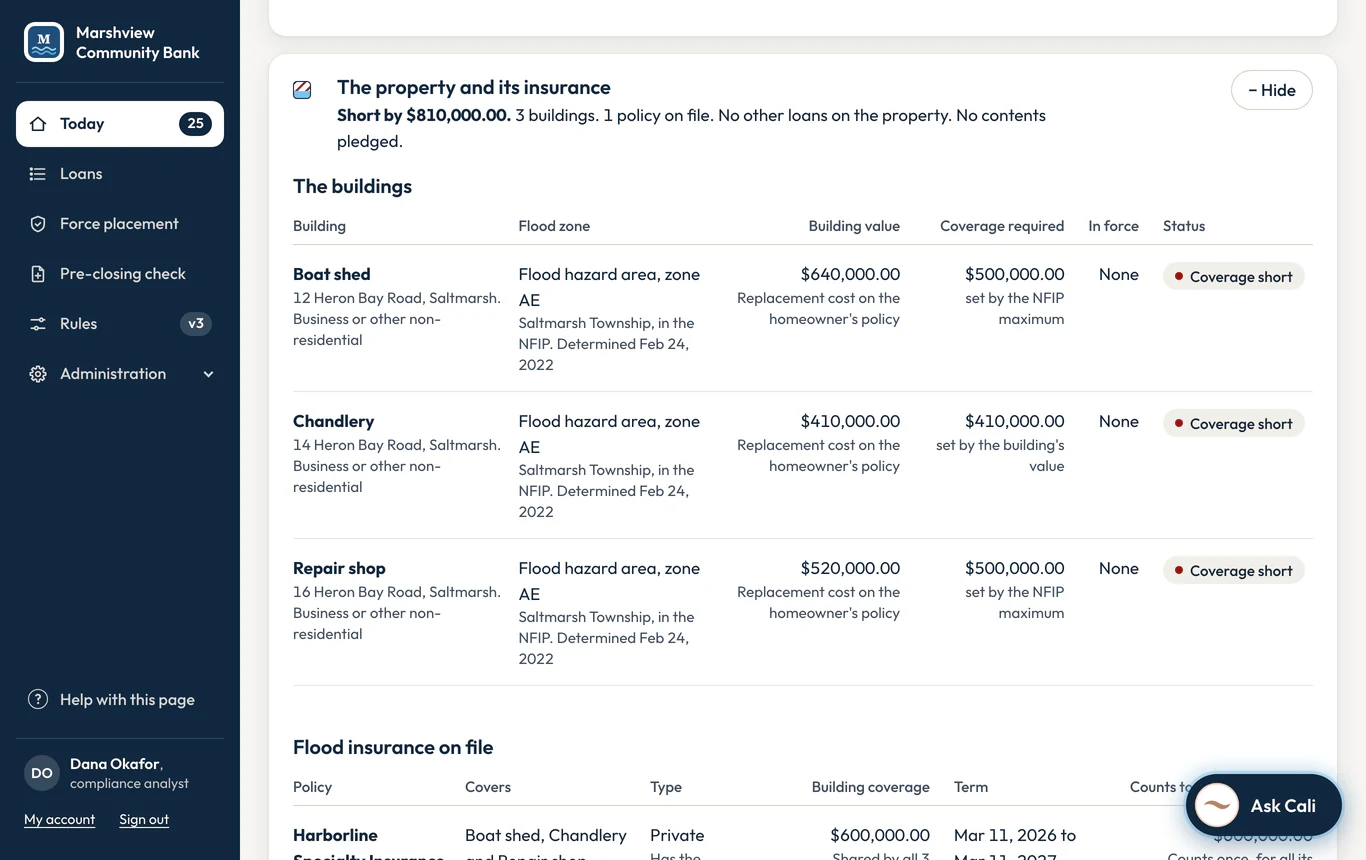
Each examiner gets their own sign-in with the examiner role. It opens the loan pages the staff use, with every action removed and a read-only notice on every page.
- The position, the evidence, the history and the rules version behind each figure.
- Who has looked at each loan, with the examiner’s own views and downloads in the same access log.
The evidence pack
What is in the evidence pack?
Any loan downloads as an evidence pack, and a pack can be made for the whole portfolio too. Each download is written into the loan’s history.
The printed loan recordThe facts, the answer and what needs attention, as of a date, under a named version of the procedures.
A workbookThe same figures.
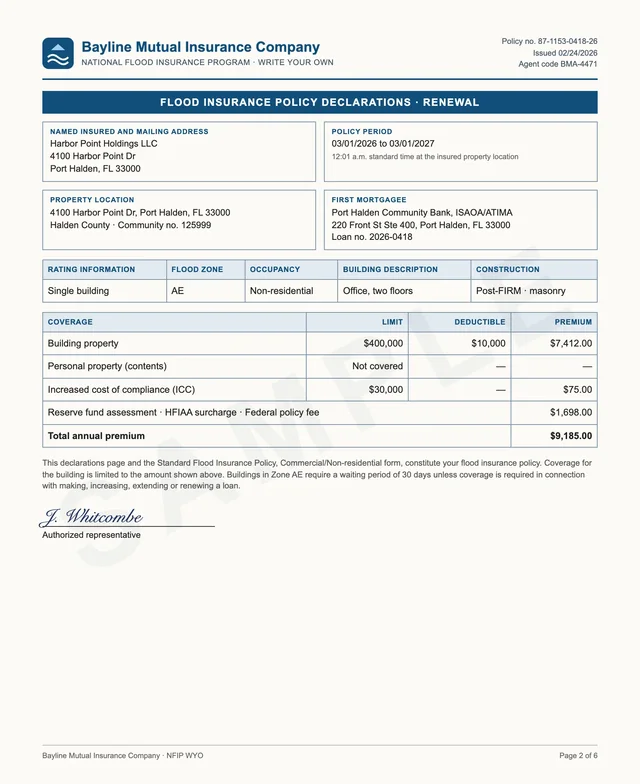
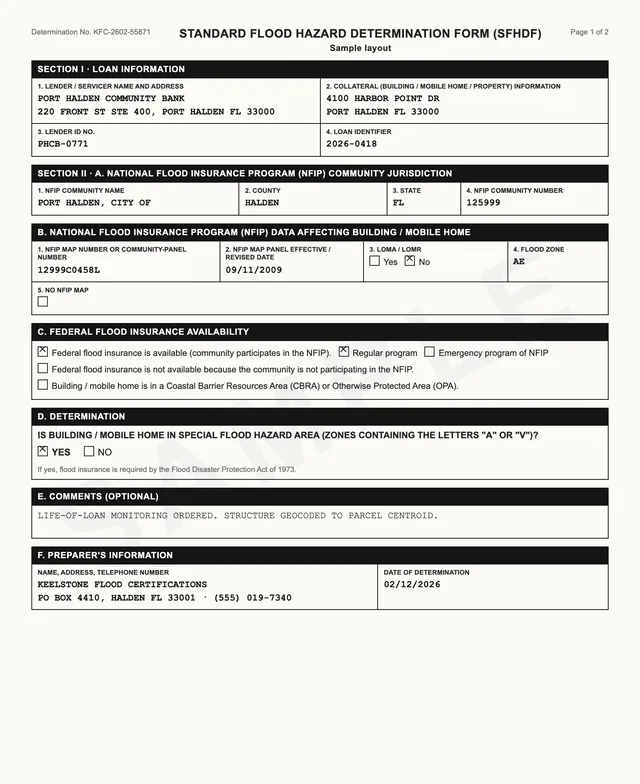
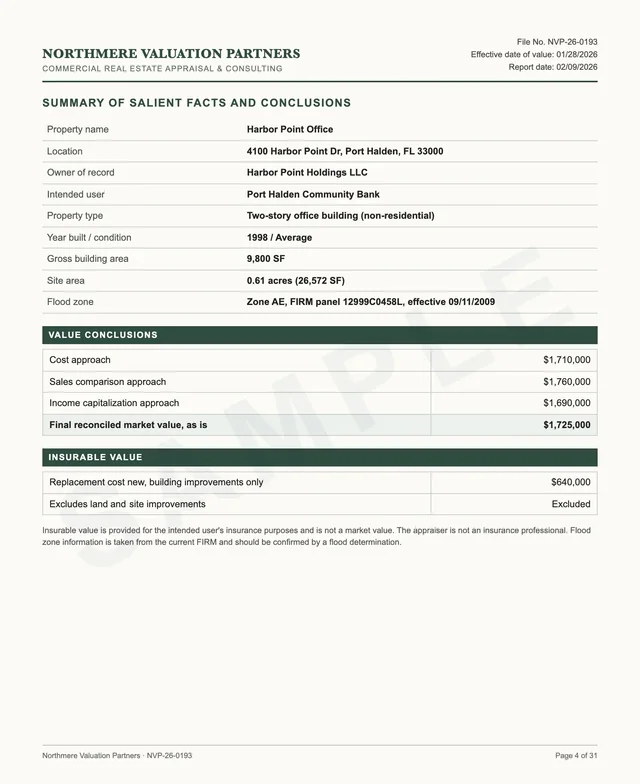
The original documents on fileSuch as the flood determination and the declarations page.
Each page a figure was read fromWith the figure marked on it.
A list of every file with its fingerprintA SHA-256 digest, so anyone can confirm nothing changed after the pack was made.
Sources
Where did each figure come from?
Every figure on a loan names its source: the page it was read from, the file it was imported in, or the person who entered it.
- Where a document disagrees with the file, both are shown; a person chooses, and the choice is recorded.
- Every requirement names the rule it rests on, as the institution’s own regulation cites it: 12 CFR 760 for a credit union, 12 CFR 339 for an FDIC-supervised bank, and so on, with the parallel rules and the interagency questions and answers behind it.

The history
Who decided what, and can it be changed afterwards?
Every decision is written to a history that shows any later change, and every view or download of a loan, document or export is logged the same way.
A history that shows changes
What was decided, by whom, on what evidence. Each entry is chained to the one before it, so a change after the fact shows, and the loan page says whether every entry checks out.
Sign-off by a named person
If that person changed the loan, a colleague signs off instead. A fixed finding is checked again by someone else. Waiving a coverage gap needs a compliance officer.
Procedures kept by version
Who proposed each change, who approved it and when it took effect. Each loan’s record names the version it was checked under.
Which loans can clear without a person?
Loans whose figures all agree and are each backed by a document can clear overnight on their own. A share of those (one in ten unless the institution sets another figure), picked so the choice can be reproduced, goes to a person to confirm.
Limits
What does FloodCaliber™ not do?
It does not make flood determinations, sell or place insurance, or send notices to borrowers itself. It records what the institution did and when, and says what is missing.
This page describes the product as of November 23, 2026. The assurance documents that are available for the vendor file, and the ones that are not yet available as of that date, are listed under assurance documents on the vendor-management page.
See the examiner view in a walkthrough.
A live walkthrough: a flood review end to end, the evidence behind every number, and answers to your questions.
When you book a demo
- Tell us about your flood program and recent exam findings.
- See a review worked from loan files to approval.
- Get a written scope and price for your institution.