
The 19 topics, in the agencies’ order
I. Applicability
Determining the Applicability of Flood Insurance Requirements for Certain Loans15 questions
- Applicability 1Does the Regulation apply to a loan where the building or mobile home securing such loan is located in a community that does not participate in the National Flood Insurance Program (NFIP)?
- Applicability 2Some borrowers have buildings with limited utility or value and, in many cases, the borrower would not replace them if lost in a flood. Must a lender require flood insurance for such buildings?
- Applicability 3What are a lender's requirements under the Regulation for a loan secured by multiple buildings when some of the buildings are located in an SFHA in which flood insurance is available and other buildings are not? What if the buildings are located in different communities and some of the communities participate in the NFIP and others do not?
- Applicability 4What is a lender's responsibility if a particular building or mobile home that secures a loan is not located within an SFHA, or is no longer located within an SFHA due to a map change?
- Applicability 5Does a lender's purchase from another lender of a loan secured by a building or mobile home located in an SFHA in which flood insurance is available under the Act trigger any requirements under the Regulation?
- Applicability 6If a loan is being restructured or modified, does that constitute a triggering event under the Regulation?
- Applicability 7Are table funded loans treated as new loan originations?
- Applicability 8Is a lender required by the Act or the Regulation to perform a review of its, or of its servicer's, existing loan portfolio for compliance with the flood insurance requirements under the Act and Regulation?
- Applicability 9Do the mandatory purchase requirements under the Act and Regulation apply when a lender participates in a loan syndication or participation?
- Applicability 10Is a lender expected to consider any triggering event or any cashless roll of which it becomes aware in any tranche of a multi-tranche credit facility, regardless of whether the lender participates in the affected tranche?
- Applicability 11Does an automatic extension of a credit facility, that was agreed upon by the borrower and the lender at loan origination and memorialized in the loan agreement, constitute a triggering event i.e., making, increasing, extending or renewing) that would trigger the Federal flood insurance requirements?
- Applicability 12What is the applicability of the mandatory purchase requirement during a period of time when coverage under the NFIP is not available?
- Applicability 13What is a “triggering event” under the Regulation? If there is a triggering event, what is required under the Regulation?
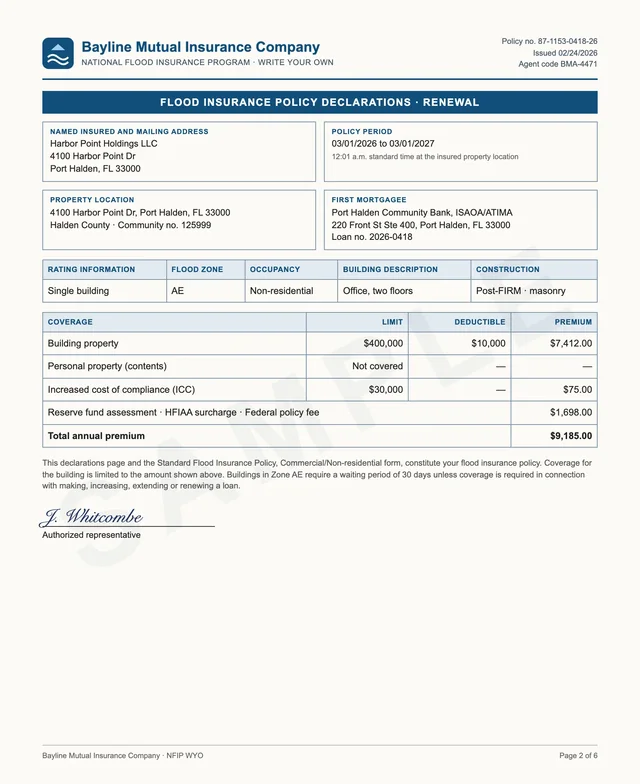
- Applicability 14May a lender rely on an insurance policy providing portfolio-wide coverage to meet the flood insurance purchase requirement or the force placement requirement under the Regulation?
- Applicability 15When does mandatory flood insurance on a designated loan need to be in place during the closing process?
II. Exemptions
Exemptions From the Mandatory Flood Insurance Purchase Requirements7 questions
- Exemptions 1What are the exemptions from the mandatory purchase requirement?
- Exemptions 2Does a lender have to take a security interest in the primary residential structure for detached structures to be eligible for the detached structure exemption? For example, suppose the house on a farm is not collateral, but all of the outbuildings including the barn, the equipment storage shed, and the silo (which are used for farm production), and a detached garage where the homeowner keeps his car, are taken as collateral. May the lender apply the detached structure exemption to the outbuildings?
- Exemptions 3Is a flood hazard determination required even where the secured property may contain detached structures for which coverage is not required under the Regulation?
- Exemptions 4If a borrower currently has a flood insurance policy on a detached structure that is part of residential property and the detached structure does not serve as a residence, may the lender or its servicer cancel its requirement to carry flood insurance on that structure?
- Exemptions 5In the event that a triggering event has occurred, is the lender required to review the intended use of each detached structure?
- Exemptions 6May a lender review current loans in its portfolio as the flood insurance policies renew and determine that it will no longer require flood insurance on a detached structure in an SFHA if the structure does not contribute to the value of the property securing the loan?
- Exemptions 7If a loan is secured by a residential property and the primary residential structure is joined to another building by a stairway or covered walkway, for purposes of Federal flood insurance requirements, would the other building qualify as a detached structure?
III. Mandatory
Private Flood Insurance—Mandatory Acceptance9 questions
- Mandatory 1May a lender decide to only accept private flood insurance policies under the mandatory acceptance provision of the Regulation?
- Mandatory 2If a lender has a policy not to originate a mortgage in non-participating communities or coastal barrier regions where the NFIP is not available, do the private flood insurance requirements under the Regulation require a lender to change its policy?
- Mandatory 3Did the Agencies intend the compliance aid statement to act as a conformity clause that would make a private policy conform to the definition of “private flood insurance”?
- Mandatory 4Is a lender required to accept a flood insurance policy issued by a private insurer that includes the compliance aid statement? Conversely, may a lender reject a flood insurance policy issued by a private insurer solely because it does not contain the compliance aid statement?
- Mandatory 5If a flood insurance policy issued by a private insurer includes the compliance aid statement, does a lender need to conduct an additional review of the policy for compliance with the mandatory acceptance provision of the Regulation?
- Mandatory 6Under the Regulation, what additional reviews does a lender need to conduct if the flood insurance policy issued by a private insurer includes the compliance aid statement?
- Mandatory 7If a flood insurance policy issued by a private issuer does not include a compliance aid statement, can a lender use the criteria under the discretionary acceptance provision to decide whether to accept the policy without first checking to see if the policy meets the criteria under the mandatory acceptance provision?
- Mandatory 8If a lender only receives a declarations page without receiving a copy of the policy, and the declarations page includes the compliance aid statement, may the lender accept the policy?
- Mandatory 9May a lender accept a private flood insurance policy that includes a compliance aid statement, but also includes a disclaimer explaining that the “insurer is not licensed in the State or jurisdiction in which the property is located,” which suggests that the policy is issued by a surplus lines insurer?
IV. Discretionary
Private Flood Insurance—Discretionary Acceptance4 questions
- Discretionary 1Are lenders required to accept flood insurance policies that meet the discretionary acceptance criteria?
- Discretionary 2If the lender determines that a flood insurance policy meets the discretionary acceptance criteria and accepts that policy, what documentation will demonstrate that the policy provides sufficient protection of the loan, consistent with general safety and soundness principles?
- Discretionary 3How can a lender evaluate the sufficiency of an insurer's solvency, strength, and ability to satisfy claims when determining whether a flood insurance policy provides sufficient protection of the loan, consistent with general safety and soundness principles?
- Discretionary 4What are some factors to consider when determining whether a flood insurance policy issued by a private insurer under the discretionary acceptance provision or a mutual aid plan provides sufficient protection of a loan secured by improved real property located in an SFHA, consistent with general safety and soundness principles?
V. Private Flood Compliance
Private Flood Insurance—General Compliance11 questions
- Private Flood Compliance 1What is the maximum deductible a flood insurance policy issued by a private insurer can have for residential or commercial properties located in an SFHA?
- Private Flood Compliance 2May a lender require that the deductible of any flood insurance policy issued by a private insurer be lower than the maximum deductible for an SFIP?
- Private Flood Compliance 3If a lender utilizes a third party to review flood insurance policies, would it be permissible for a lender to charge the borrower a fee for this review?
- Private Flood Compliance 4If the policy is not available prior to closing, what can the lender rely on to make sure the policy meets the private flood insurance requirements of the Regulation?
- Private Flood Compliance 5Under existing force placement requirements, a declarations page is sufficient to evidence a borrower's purchase of a flood insurance policy. Does the declarations page have sufficient information for a lender to determine whether the policy complies with the private flood insurance requirements of the Regulation?
- Private Flood Compliance 6May a lender accept a multiple-peril policy issued by a private insurer to satisfy the mandatory purchase of flood insurance requirement?
- Private Flood Compliance 7How do the private flood insurance requirements of the Regulation, especially the compliance aid statement, work in conjunction with the requirements from secondary market investors (for example, the Federal National Mortgage Association (Fannie Mae) or the Federal Home Loan Mortgage Corporation (Freddie Mac))?
- Private Flood Compliance 8When servicing a loan covered by flood insurance pursuant to the Act and the Regulation, which requirements must a servicer follow in evaluating the acceptance of a flood insurance policy issued by a private insurer?
- Private Flood Compliance 9How can a lender determine: (i) whether an insurer is licensed or admitted in a particular State, (ii) or whether a surplus lines or nonadmitted alien insurer is permitted to issue an insurance policy in a particular State?
- Private Flood Compliance 10May lenders accept policies issued by private insurers that are surplus lines insurers for noncommercial properties?
- Private Flood Compliance 11When must a lender review a flood insurance policy issued by a private insurer under the private flood insurance requirements of the Regulation?
VI. SFHDF
Standard Flood Hazard Determination Form4 questions
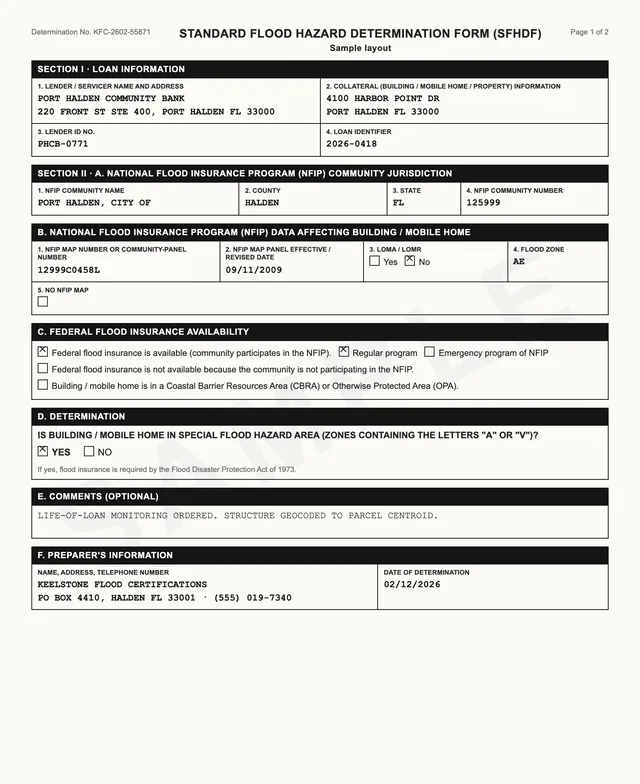
- SFHDF 1Does the SFHDF replace the borrower notification form?
- SFHDF 2May a lender provide the SFHDF to the borrower?
- SFHDF 3May the SFHDF be used in electronic format?
- SFHDF 4May a lender rely on a previous determination for a refinancing or assumption of a loan or multiple loans to the same borrower secured by the same property?
VII. Fees
Flood Insurance Determination Fees2 questions
VIII. Zone
Flood Zone Discrepancies3 questions
- Zone 1Does a lender need to reconcile a discrepancy between the flood zone designation on the flood determination form and the flood zone associated with a flood insurance policy?
- Zone 2Is a lender in violation of the Regulation if there is a discrepancy between the flood zone on the SFHDF and the flood zone associated with a flood insurance policy?
- Zone 3What should a lender do when the lender's flood zone determination specifies that a building securing the loan is located in an SFHA requiring mandatory flood insurance coverage, but the borrower disputes that determination?
IX. Notice
Notice of Special Flood Hazards and Availability of Federal Disaster Relief7 questions
- Notice 1Does the Notice of Special Flood Hazards have to be provided to each borrower for a real estate related loan?
- Notice 2When should a lender provide the Notice of Special Flood Hazards to the borrower? How does this requirement apply in situations regarding mobile homes where the lender may not know where the home is to be located until just prior to, or sometimes after, the time of loan closing?
- Notice 3When is the lender required to provide notice to the servicer of a loan that flood insurance is required?
- Notice 4What will constitute appropriate form of notice to the servicer?
- Notice 5How long must the lender maintain the record of receipt by the borrower of the Notice of Special Flood Hazards?
- Notice 6Can a lender rely on a previous Notice of Special Flood Hazards if it is less than seven years old, and it is the same property, same borrower, and same lender?
- Notice 7Is use of the sample form of Notice of Special Flood Hazards mandatory?
X. Amount
Determining the Appropriate Amount of Flood Insurance Required10 questions
- Amount 1The Regulation states that the amount of flood insurance required “must be at least equal to the lesser of the outstanding principal balance of the designated loan or the maximum limit of coverage available for the particular type of property under the Act.” What is meant by the “maximum limit of coverage available for the particular type of property under the Act”?
- Amount 2What is the “insurable value” of a building and how is it used to determine the required amount of flood insurance?
- Amount 3What are examples of residential buildings?
- Amount 4What are examples of non-residential buildings?
- Amount 5How much insurance is required on a building located in an SFHA in a participating community?
- Amount 6Is flood insurance required for each building when the real estate security contains more than one building located in an SFHA in a participating community? If so, how much coverage is required?
- Amount 7If the insurable value of a building or mobile home securing a designated loan is less than the outstanding principal balance of the loan, must a lender require the borrower to obtain flood insurance up to the balance of the loan?
- Amount 8Can a lender require more flood insurance than the minimum required by the Regulation?
- Amount 9Can a lender allow the borrower to use the maximum deductible to reduce the cost of flood insurance?
- Amount 10Can a lender accept a blanket flood insurance policy or blanket multi-peril policy covering multiple buildings that includes a per-occurrence deductible, regardless of whether any single building covered by the policy has an insurable value lower than the amount of the deductible?
XI. Construction
Flood Insurance Requirements for Construction Loans6 questions
- Construction 1Is a loan secured only by land, which is located in an SFHA in which flood insurance is available under the Act and that will be developed into buildable lot(s), a designated loan that requires flood insurance?
- Construction 2Is a loan secured or to be secured by a building in the course of construction that is located or to be located in an SFHA in which flood insurance is available under the Act a designated loan?
- Construction 3Is a building in the course of construction that is located in an SFHA in which flood insurance is available under the Act eligible for coverage under an NFIP policy?
- Construction 4When must a lender require the purchase of flood insurance for a loan secured by a building in the course of construction that is located in an SFHA in which flood insurance is available?
- Construction 5Does the NFIP 30-day waiting period apply when the purchase of the flood insurance policy is deferred in connection with a construction loan?
- Construction 6If a lender allows a borrower to defer the purchase of flood insurance until either a foundation slab has been poured and/or an Elevation Certificate has been issued, or if the building to be constructed will have its lowest floor below Base Flood Elevation when the building is walled and roofed, when must the lender begin escrowing flood insurance premiums and fees?
XII. Condo and Co-Op
Flood Insurance Requirements for Residential Condominiums and CO-Ops10 questions
- Condo and Co-Op 1Are residential condominiums, including multi-story condominium complexes, subject to the statutory and regulatory requirements for flood insurance?
- Condo and Co-Op 2What is an NFIP Residential Condominium Building Association Policy (RCBAP)?
- Condo and Co-Op 3What is the amount of flood insurance coverage that a lender must require with respect to residential condominium units, including those located in multi-story residential condominium complexes, to comply with the mandatory purchase requirements under the Act and the Regulation?
- Condo and Co-Op 4For residential condominiums with no RCBAP coverage, what action must a lender take for an individual unit owner?
- Condo and Co-Op 5What action must a lender take if the RCBAP coverage is insufficient to meet the Regulation's mandatory purchase requirements for a loan secured by an individual residential condominium unit?
- Condo and Co-Op 6What must a lender do when a loan secured by a residential condominium unit is in a complex whose condominium association allows its existing RCBAP to lapse?
- Condo and Co-Op 7How does the RCBAP's co-insurance penalty apply in the case of residential condominiums, including those located in multi-story condominium complexes?
- Condo and Co-Op 8What are the major factors involved with the individual unit owner's NFIP Dwelling Policy's coverage limitations with respect to the condominium association's RCBAP coverage?
- Condo and Co-Op 9What are the flood insurance requirements for a residential condominium unit or a non-residential condominium unit located in a non-residential condominium building? What are the flood insurance requirements for a non-residential condominium unit located in a residential condominium building?
- Condo and Co-Op 10What flood insurance requirements apply to a loan secured by a share in a cooperative building that is located in an SFHA?
XIII. Other Security Interests
Flood Insurance Requirements for Home Equity Loans, Lines of Credit, Subordinate Liens, and Other Security Interests in Collateral (Contents) Located in an SFHA12 questions
- Other Security Interests 1Is a home equity loan considered a designated loan that requires flood insurance?
- Other Security Interests 2Does a draw against an approved line of credit secured by a building or mobile home, which is located in an SFHA in which flood insurance is available under the Act, require a flood determination under the Regulation?
- Other Security Interests 3What is the amount of flood insurance coverage required on a line of credit secured by a residential improved real estate?
- Other Security Interests 4When a lender makes, increases, extends or renews a second mortgage secured by a building or mobile home located in an SFHA, how much flood insurance must the lender require?
- Other Security Interests 5If a borrower requesting a loan secured by a junior lien provides evidence that flood insurance coverage is in place, does the lender have to make a new determination? Does the lender have to adjust the insurance coverage?
- Other Security Interests 6If the loan request is to finance inventory stored in a building located within an SFHA, but the building is not security for the loan, is flood insurance required?
- Other Security Interests 7Is flood insurance required if a building and its contents both secure a loan, and the building is located in an SFHA in which flood insurance is available?
- Other Security Interests 8If a loan is secured by Building A, which is located in an SFHA, and contents located in Building B where building B does not secure the loan, is flood insurance required on the contents securing the loan?
- Other Security Interests 9Does the Regulation apply when the lender takes a security interest in improved real estate and contents located in an SFHA only as an “abundance of caution”?
- Other Security Interests 10Is flood insurance required if the lender takes a security interest in contents located in a building in an SFHA securing the loan but does not perfect the security interest?
- Other Security Interests 11If a borrower offers a note on a single-family dwelling as collateral for a loan but the lender does not take a security interest in the dwelling itself, is this a designated loan that requires flood insurance?
- Other Security Interests 12If a lender makes a loan that is not secured by real estate, but is made on the condition of a personal guarantee by a third party who gives the lender a security interest in improved real estate owned by the third party that is located in an SFHA in which flood insurance is available, is it a designated loan that requires flood insurance?
XIV. Escrow
Requirement To Escrow Flood Insurance Premiums and Fees—General7 questions
- Escrow 1When must escrow accounts be established for flood insurance purposes?
- Escrow 2If a lender does not escrow for taxes or homeowner's insurance, is it required to escrow for flood insurance under the Regulation? If yes, is the lender obligated to escrow for taxes and other insurance because it escrows for flood insurance pursuant to the rule?
- Escrow 3Are lenders required to escrow force-placed insurance?
- Escrow 4Does the requirement to escrow flood insurance premiums and fees apply when a loan does not experience a triggering event?
- Escrow 5Are multi-family buildings or mixed-use properties included in the definition of “residential improved real estate” under the Regulation for which escrows are required (unless an exception applies)?
- Escrow 6If a borrower obtains a second mortgage loan for a property located in an SFHA, and it is determined that the first lienholder does not have sufficient flood insurance coverage for both liens and is not currently escrowing for flood insurance, does the junior lienholder have to escrow for the additional amount of flood insurance coverage?
- Escrow 7Does a lender or servicer have to escrow for loans when the security property is not located in an SFHA, but the borrower chooses to buy flood insurance?
XV. Escrow Small Lender Exception
Requirement To Escrow Flood Insurance Premiums and Fees—Escrow Small Lender Exception7 questions
- Escrow Small Lender Exception 1Is the $1B small lender exception for the mandatory escrow of flood insurance premiums at the lending institution level or bank holding company level?
- Escrow Small Lender Exception 2If a lender was required to escrow for taxes and hazard insurance solely under the (a) Higher-Priced Mortgage Loan (HPML) rules or (b) U.S. Department of Agriculture (USDA) or Federal Housing Administration (FHA) programs on or before July 6, 2012, is such a lender, who otherwise qualifies for the small lender exception, required to escrow the premiums and fees for flood insurance?
- Escrow Small Lender Exception 3Is a lender disqualified from the small lender escrow exception if it is required to collect escrowed funds on a mortgage loan on behalf of a third party?
- Escrow Small Lender Exception 4Is a lender eligible for the small lender exception if, on or before July 6, 2012, it offered escrow accounts only upon a borrower's request?
- Escrow Small Lender Exception 5Is the option to escrow notice required for all outstanding loans secured by residential real estate that are not excepted from the escrow requirement? What about outstanding loans that are not secured by buildings located in SFHAs?
- Escrow Small Lender Exception 6If the borrower has waived escrow of flood insurance premiums and fees, does the lender or its servicer still need to send a notice to offer the ability to escrow for the flood insurance?
- Escrow Small Lender Exception 7Is it correct that lenders that qualify for the small lender exception are not required to provide borrowers the escrow notice or the option to escrow notice?
XVI. Escrow Loan Exceptions
Requirement To Escrow Flood Insurance Premiums and Fees—Escrow Loan Exceptions5 questions
- Escrow Loan Exceptions 1Are escrow accounts for flood insurance premiums and fees required for commercial loans that are secured by residential property?
- Escrow Loan Exceptions 2Are escrow accounts for flood insurance premiums and fees required for loans secured by particular units located in multi-family buildings?
- Escrow Loan Exceptions 3Which requirements for an escrow account apply to a property covered by an RCBAP?
- Escrow Loan Exceptions 4Do construction-permanent loans qualify for the 12-month exception if one phase of the loan is for 12 months or less?
- Escrow Loan Exceptions 5Although a lender is not required to monitor whether a subordinate lien moves into first lien position for the purpose of the mandatory escrow requirement, if the lender becomes aware that the subordinate lien exception no longer applies, when must the lender begin to escrow?
XVII. Force Placement
Force Placement Of Flood Insurance16 questions
- Force Placement 1What is the requirement for the force placement of flood insurance under the Act and the Regulation?
- Force Placement 2When must a lender provide the force placement notice to the borrower?
- Force Placement 3May a servicer force place on behalf of a lender?
- Force Placement 4May a lender satisfy its notice requirement by sending the force placement notice to the borrower prior to the expiration of the flood insurance policy?
- Force Placement 5When must the lender have flood insurance in place if the borrower has not obtained adequate insurance within 45 days after notification?
- Force Placement 6Once a lender makes a determination that a designated loan has no or insufficient flood insurance coverage and sends the borrower a force placement notice, may a lender make a subsequent determination in connection with the initial notification period that the designated loan has no or insufficient coverage and send another force placement notice, effectively providing more than 45 days for the borrower to obtain sufficient coverage?
- Force Placement 7May a lender commence a force-placed insurance policy on the day the previous policy expires, or must the new policy begin on the day after?
- Force Placement 8When force placement occurs, what is the amount of insurance required to be placed?
- Force Placement 9When may a lender or its servicer charge the borrower for the cost of force-placed insurance?
- Force Placement 10Does capitalizing the flood insurance premium into the outstanding principal balance constitute a triggering event—an “increase” that would trigger the applicability of flood insurance regulatory requirements?
- Force Placement 11What documentation is sufficient to demonstrate evidence of flood insurance in connection with a lender's refund of premiums paid by a borrower for force-placed insurance during any period of overlap with borrower-purchased insurance?
- Force Placement 12If a lender receives a confirmation, consistent with the Regulation, of a borrower's existing flood insurance coverage evidencing an overlap with a force-placed flood insurance policy, but the lender does not receive a refund from the insurance provider of the force-placed flood insurance policy in a timely manner, is the lender still required to refund any premiums for overlapping coverage to the borrower within 30 days?
- Force Placement 13Is a lender permitted to increase, renew, or extend a designated loan that is currently insured by force-placed insurance? More specifically, if the borrower is undergoing a refinance or a loan modification, can the lender rely on the existing force-placed insurance to meet the mandatory purchase requirement?
- Force Placement 14If a borrower's force-placed flood insurance expires, is the lender required to send a force placement notification to the borrower prior to renewing the force-placed flood insurance coverage?
- Force Placement 15Are lenders required to have in place “Life-of-Loan” monitoring for continuous coverage of designated loans?
- Force Placement 16If a lender or its servicer receives a notice of remapping that states that a property has been or will be remapped into an SFHA, what do the Act and Regulation require the lender or its servicer to do?
XVIII. Servicing
Flood Insurance Requirements in the Event of the Sale or Transfer of a Designated Loan and/or Its Servicing Rights7 questions
- Servicing 1How do the flood insurance requirements under the Regulation apply to lenders under the following scenarios involving loan servicing?
- Servicing 2When a lender makes a designated loan and will be servicing that loan, what are the requirements for notifying the Administrator of FEMA or the Administrator's designee, i.e. the insurance provider?
- Servicing 3Would a Real Estate Settlement Procedures Act (RESPA) Notice of Transfer sent to the Administrator of FEMA (or the Administrator's designee, i.e., the insurance provider) satisfy the requirements of the Act?
- Servicing 4Can delivery of the notice be made electronically, including batch transmission?
- Servicing 5If the loan and its servicing rights are sold by the lender, is the lender required to provide notice to the Administrator or the Administrator's designee (i.e., the insurance provider)?
- Servicing 6Is a lender required to provide notice when the servicer, not the lender, sells or transfers the servicing rights to another servicer?
- Servicing 7In the event of a merger or acquisition of one lender with another, what are the responsibilities of the parties for notifying the Administrator's designee (i.e., the insurance provider)?
XIX. Penalty
Mandatory Civil Money Penalties2 questions
The agencies’ text, not legal advice. These pages reproduce the questions and answers as published. They are not FloodCaliber™’s reading of any item. Rely on the Federal Register document or the Federal Reserve’s page, and confirm your procedures with your counsel. Our plain-English summary is in the guide to the Interagency Q&As.
Sources
The Federal Register document, the Federal Reserve’s page, and when we retrieved the text
- Interagency Questions and Answers Regarding Flood Insurance, 87 FR 32826 (May 31, 2022), Federal Register. Published by the OCC, the Federal Reserve, the FDIC, the Farm Credit Administration and the NCUA; effective May 31, 2022.
- Interagency Questions and Answers Regarding Flood Insurance, the Federal Reserve’s page for the Q&As, with an anchor for each question.
- Our guide to the Interagency Q&As: what they are, the 19 sections, the answers lenders look up most and how to cite them.
Text retrieved October 29, 2026.