
Flood compliance terms, in plain words.
The words bank staff meet in a flood review, each explained in a sentence or two and linked to the guide it comes from.
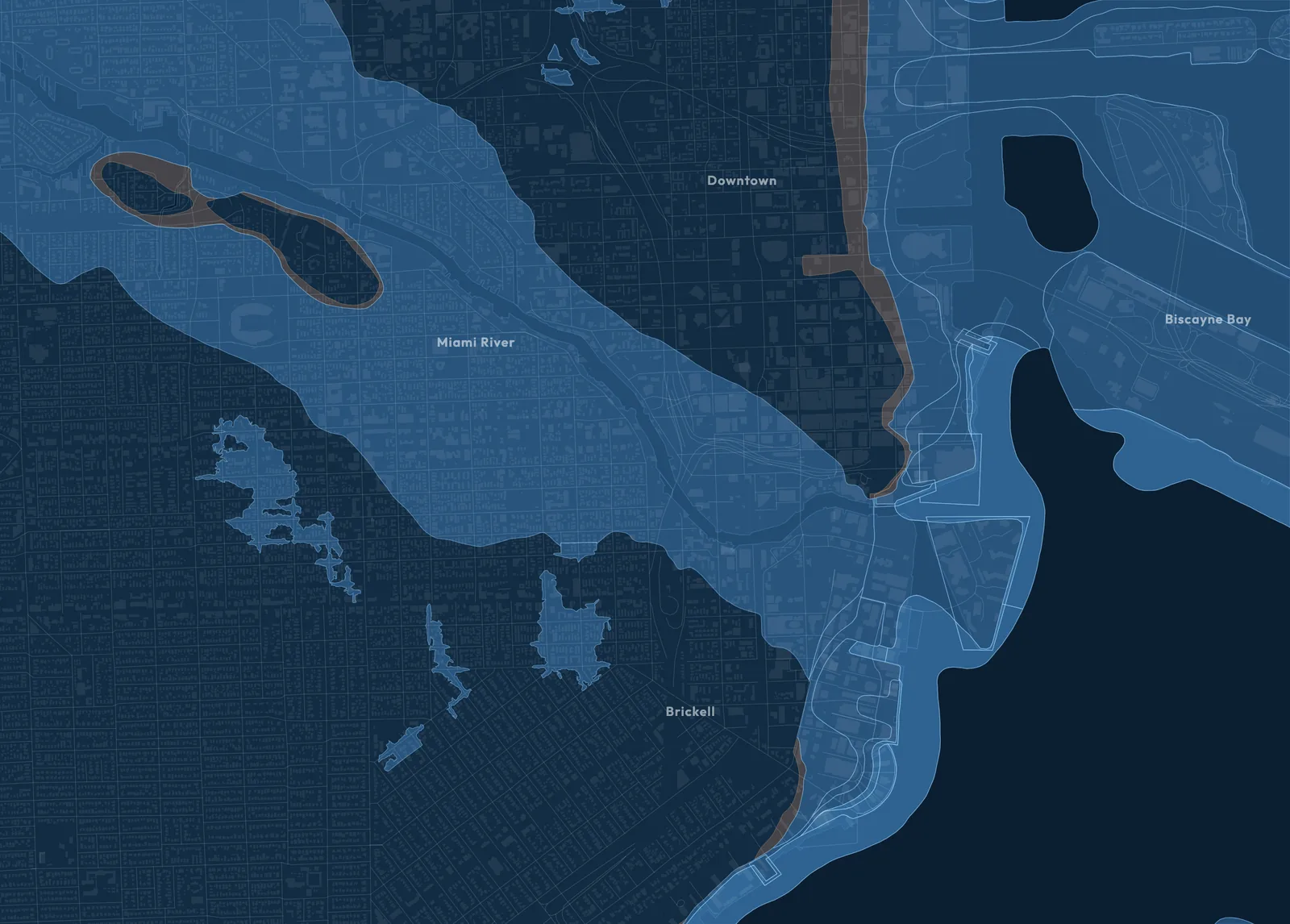
Special Flood Hazard Area (SFHA)
The flood zone area, drawn on FEMA’s flood maps, that decides whether flood insurance is required.
From the guide: flood zone determinations
In short: This glossary explains 40 terms from the federal flood insurance rules for lenders, in plain English. Every definition comes from our guides or the agencies’ Interagency Questions and Answers, and links to its source.
B
- Building
- A walled and roofed structure, other than a gas or liquid storage tank, that is mainly above ground and fixed to a permanent site, including one under construction. A shed with walls and a roof on a slab counts; a carport without walls does not. From the guide: How much flood insurance is required
C
- Civil money penalties
- Penalties a federal regulator must assess when it finds a lender has a pattern or practice of certain flood violations. They are charged for each violation, with no cap on the total. From the guide: Civil money penalties
- Community participation
- See Participating community.
- Compliance aid statement
- A fixed sentence in a private flood policy, or in an endorsement to it, saying the policy meets the definition of private flood insurance. With it, a lender may treat the policy as meeting the definition without further review, but must still check the amount of coverage. From the guide: Private flood insurance acceptance
- Contents coverage
- Flood insurance on personal property inside an insured building, such as furniture and fixtures, machinery and equipment, and stock. It is required when a building in an SFHA and its contents both secure the loan. From the guide: How much flood insurance is required
D
- Declarations page
- A page of a flood policy that lenders use as proof of coverage. After force placement, a lender must accept it as confirmation of the borrower’s own policy if it shows the policy number and the name and contact details of the insurance company or agent. From the guide: Force-placed flood insurance
- Designated loan
- A loan secured by a building or mobile home located, or to be located, in a special flood hazard area where NFIP insurance is available. It can be commercial or residential. From the guide: Flood insurance requirements for lenders
- Detached structure exemption
- An exemption from the flood insurance requirement for a structure on residential property that stands apart from the home and does not serve as a residence, such as a freestanding garage used for the family’s cars. It does not cover structures used mainly for business or farming. From the guide: Exemptions and detached structures
- Discretionary acceptance
- A lender’s choice to accept a private flood policy that does not meet the regulation’s definition of private flood insurance. The policy must meet four criteria, and the lender must document in writing that it sufficiently protects the loan. From the guide: Private flood insurance acceptance
E
- Escrow
- An account, paid into as often as the loan payments, from which flood insurance premiums and fees are paid. It is required on most residential designated loans made, increased, extended or renewed on or after January 1, 2016, unless the loan or the lender qualifies for an exception. From the guide: Flood insurance escrow
- Exemptions
- Only three things are exempt from the federal flood insurance requirement: state-owned property covered by self-insurance that satisfies FEMA, a loan with an original principal balance of $5,000 or less and a repayment term of one year or less, and a detached structure on residential property that does not serve as a residence. Low value is not an exemption. From the guide: Exemptions and detached structures
F
- FDPA
- See Flood Disaster Protection Act.
- Flood Disaster Protection Act (FDPA)
- The 1973 federal law that, with the National Flood Insurance Act of 1968, stands behind the flood insurance rules for lenders. Each federal regulator puts the two laws into its own rule for the lenders it supervises. From the guide: Flood insurance requirements for lenders
- Flood map change
- See Remapping.
- Flood zone determination
- A finding, on FEMA’s Standard Flood Hazard Determination Form, of whether a building or mobile home securing a loan is in a special flood hazard area where NFIP insurance is available. It decides whether the federal purchase requirement applies. From the guide: Flood zone determinations and the SFHDF
- Force placement
- When a building securing a designated loan has no flood insurance, or less than the required amount, the lender notifies the borrower and buys the coverage itself if the borrower has not within 45 days after notification. Once the borrower proves their own coverage, the lender has 30 days to cancel the placed policy and refund any overlap. From the guide: Force-placed flood insurance
- Force-placement notice
- The notice a lender sends when it finds flood coverage missing or short. It tells the borrower to obtain flood insurance, at the borrower’s expense, in at least the required amount; the 45 days run from it, and there is no required form. From the guide: Force-placed flood insurance
- 45-day notice
- See Force-placement notice.
I
- Insurable value
- Generally the same as 100 percent replacement cost value: the cost to replace the building with the same kind of material and construction, without deducting depreciation. For flood insurance it includes the foundation and supporting structures, and leaves out land. From the guide: How much flood insurance is required
- Interagency Questions and Answers
- Joint guidance from the five federal regulators, published in the Federal Register on May 31, 2022: 144 questions and answers in 19 sections. They are guidance, not the rule itself; they explain how the regulators read the rules. From the guide: The Interagency Flood Q&A by topic
L
- Letter of Determination Review (LODR)
- One of FEMA’s reviews when a borrower disputes a flood zone determination and the dispute cannot be settled with the determination provider. Until FEMA decides the building is not in an SFHA, the required coverage stays in place. From the guide: Flood zone determinations and the SFHDF
- Letter of Map Change (LOMC)
- One of FEMA’s reviews of a disputed flood zone. It comes as a Letter of Map Amendment (LOMA), a Letter of Map Revision (LOMR) or a Letter of Map Revision Based on Fill (LOMR-F); until FEMA decides the building is not in an SFHA, the required coverage stays in place. From the Interagency Q&A: Zone 3
- LODR
- See Letter of Determination Review.
- LOMA
- See Letter of Map Change.
- LOMR
- See Letter of Map Change.
M
- Make, increase, renew, extend (MIRE)
- The four loan events that switch on most federal flood requirements: making, increasing, extending or renewing a designated loan. A lender may not do any of the four unless the required flood insurance is in place for the term of the loan. From the guide: Make, increase, renew, extend
- Mandatory acceptance
- The rule that a lender must accept a private flood policy when it meets the regulation’s definition of private flood insurance and provides the required amount of coverage. From the guide: Private flood insurance acceptance
- Maximum NFIP limit
- The most building coverage the NFIP offers for a type of property: $250,000 for a single-family or two-to-four family home, and $500,000 for other residential and non-residential buildings. These are regular program limits; the most available for one building is the lower of its limit and its insurable value. From the guide: How much flood insurance is required
- MIRE
- See Make, increase, renew, extend.
N
- National Flood Insurance Program (NFIP)
- The program that makes flood insurance available in communities that take part in it. Each NFIP policy insures one building and the contents inside it, and NFIP limits cap the amount a lender must require. From the guide: How much flood insurance is required
- NFIP
- See National Flood Insurance Program.
- Notice of special flood hazards
- A written notice telling the borrower that the building is, or will be, in a special flood hazard area, with the purchase requirement that applies. The lender gives it a reasonable time before closing (ten calendar days is generally reasonable) every time it makes, increases, extends or renews the loan, and keeps a record of receipt. From the guide: Notice of special flood hazards
P
- Participating community
- A community that takes part in the NFIP. Where a community does not, flood insurance need not be required, but the lender must still make the flood determination and, for a building in an SFHA, give the notice. From the guide: Flood insurance requirements for lenders
- Pattern or practice
- The finding that makes civil money penalties mandatory; the law does not define it. Isolated, unrelated or accidental violations will not be one, while repeated, intentional, regular or institutionalized practices almost always will. From the guide: Civil money penalties
- Private flood insurance
- A flood policy from a private insurer that meets the regulation’s definition: an insurer approved in the property’s state, coverage at least as broad as the NFIP’s standard policy, and a set of required provisions. A lender must accept one that provides the required amount of coverage. From the guide: Private flood insurance acceptance
R
- Regulation H
- The Federal Reserve regulation that holds the flood rule for state member banks, at 12 CFR 208.25. The OCC, the FDIC, the NCUA and the Farm Credit Administration have flood rules of their own, and all five read the same in substance. From the guide: Flood insurance requirements for lenders
- Regulation X
- The CFPB regulation whose force-placed insurance rule, 12 CFR 1024.37, covers hazard insurance on residential mortgage loans. That rule expressly excludes the flood insurance the Flood Disaster Protection Act requires, so flood force placement follows the regulator’s flood rule instead. From the guide: Force-placed flood insurance
- Remapping
- A FEMA flood map change that moves a building into or out of a special flood hazard area. A building remapped in makes its loan a designated loan on the map change’s effective date; when a building is mapped out, the federal requirement no longer applies. From the guide: Flood map changes
- Replacement cost value
- See Insurable value.
- Required amount
- The least flood insurance a lender must require: the lesser of the loan’s outstanding principal balance and the most flood coverage available for that type of property. It is worked building by building, taking the lower of each building’s insurable value and its NFIP limit. From the guide: How much flood insurance is required
- Residential Condominium Building Association Policy (RCBAP)
- A master policy the NFIP sells only to condominium associations, for a residential condominium building: one with at least 75 percent of its floor area in residential use. It can cover up to the lesser of 100 percent of the building’s replacement cost and $250,000 times the number of units. From the guide: Condominiums and the RCBAP
- Risk Rating 2.0
- Under FEMA’s Risk Rating 2.0, NFIP premiums no longer depend on the flood zone, so a lender need not reconcile a different zone shown on the flood policy. The lender’s determination still decides whether the building is in an SFHA. From the guide: Flood map changes
S
- SFHA
- See Special Flood Hazard Area.
- SFHDF
- See Standard Flood Hazard Determination Form.
- SFIP
- See Standard Flood Insurance Policy.
- Small lender exception
- An exception from flood escrow for a lender with total assets below $1 billion at either of the two prior year-ends that, on or before July 6, 2012, was not required by law to escrow for the full term of any residential loan and had no policy of consistently requiring escrow. It does not apply where state law requires escrow. From the guide: Flood insurance escrow
- Special Flood Hazard Area (SFHA)
- The flood zone area, drawn on FEMA’s flood maps, that decides whether flood insurance is required. Under the federal rules only buildings in an SFHA need flood insurance, and a building that is even partly in the SFHA counts. From the guide: Flood zone determinations and the SFHDF
- Standard Flood Hazard Determination Form (SFHDF)
- FEMA’s form on which a lender records whether each building or mobile home securing a loan is, or will be, in an SFHA where NFIP insurance is available. The lender keeps the completed form for as long as it owns the loan. From the guide: Flood zone determinations and the SFHDF
- Standard Flood Insurance Policy (SFIP)
- The NFIP’s standard flood policy. A private flood policy is measured against it: to meet the definition of private flood insurance, its coverage must be at least as broad as an SFIP’s for the same type of property. From the guide: Private flood insurance acceptance
T
- Triggering event
- The moment a designated loan is made, increased, extended or renewed. At each one the lender determines the flood zone, gives the notice of special flood hazards and requires the right amount of coverage; buying a loan or a flood map change is not a triggering event. From the guide: Make, increase, renew, extend
W
- Waiting period
- New NFIP coverage generally takes effect 30 days after the application and premium payment. When the policy is bought in connection with making, increasing, extending or renewing a loan, it takes effect at closing if the application is made and the premium presented at or before closing. From the guide: Construction loans
Z
- Zone AE
- A flood zone that is a special flood hazard area (SFHA). In our guide’s worked example, every building in Zone AE that secures the loan counts toward the required flood insurance. From the guide: How much flood insurance is required
- Zone X
- A flood zone outside the special flood hazard area (SFHA). In our guide’s worked example, the building in Zone X needs no flood insurance under the federal rule, though the lender may still require it. From the guide: How much flood insurance is required
General information, not legal advice. These definitions are short summaries of our guides and of the agencies’ Questions and Answers. State law, investor requirements and your loan contracts can add to the federal rules, so confirm your procedures with your counsel.