
The key points
For residential loans in a special flood hazard area, yes, unless an exception applies. A lender, or its servicer, must escrow all premiums and fees for the required flood insurance when all of these are true (12 CFR 22.5(a)(1)):
- It’s a designated loan: secured by a building or mobile home located, or to be located, in an SFHA where NFIP insurance is available.
- It’s secured by residential improved real estate or a mobile home.
- It was made, increased, extended or renewed on or after January 1, 2016.
- Neither the loan nor the lender qualifies for an exception.
The escrow is payable as often as the loan payments, for the duration of the loan. Rule citations are to the OCC’s Part 22; the other regulators’ rules say the same (see each regulator’s rule). “Q&A” references are to the regulators’ 2022 Interagency Questions and Answers Regarding Flood Insurance.
When is escrow required?
- Residential means any home or residential building. Residential improved real estate is real estate with a home or other residential building on it (12 CFR 22.2(l)). Single-family, two-to-four family and buildings of five or more units all count, owner- or renter-occupied. For a mixed-use building, look at its primary use (Q&A Escrow 5).
- It starts at a triggering event. Escrow is required when the loan is made, increased, extended or renewed. A loan with no triggering event doesn’t need escrow unless the borrower asks for it under the option to escrow, or a loan exception stops applying (Q&A Escrow 4).
- Flood escrow stands alone. If you must escrow flood insurance, you must do it even if you don’t escrow taxes or hazard insurance, and escrowing flood doesn’t by itself oblige you to escrow anything else (Q&A Escrow 2).
- Force-placed premiums too. There’s no exception for force-placed flood insurance on a residential designated loan (Q&A Escrow 3).
- Paying the premium. When the insurer’s notice says premiums are due, pay from the escrow account by the due date. RESPA’s escrow account rules apply only if the loan is otherwise subject to RESPA (12 CFR 22.5(a)(4)).
The six loan exceptions
Escrow isn’t required for a loan that is (12 CFR 22.5(a)(2)):
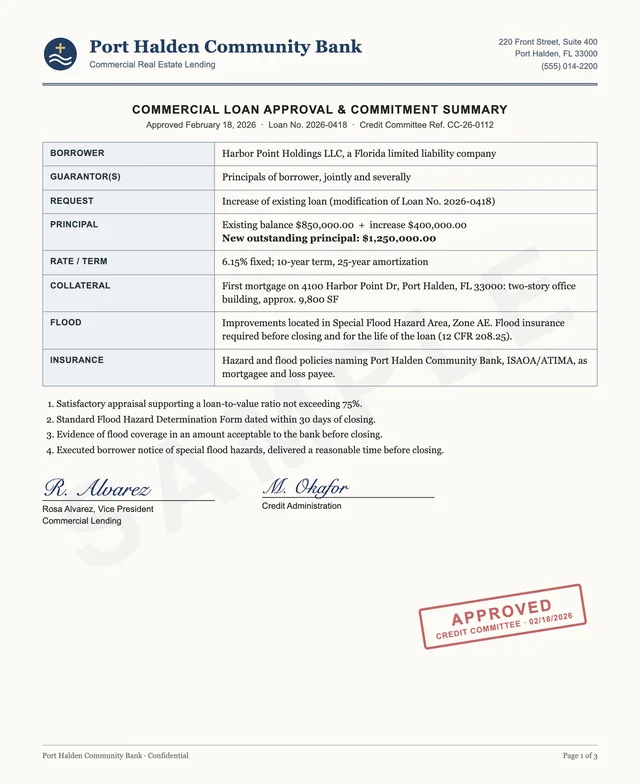
For a business, commercial or agricultural purpose
Primarily, even when it’s secured by residential property (Q&A Escrow Loan Exceptions 1).
A junior lien behind an adequately insured senior lien
When the borrower has flood insurance meeting the requirement for the same property. If the senior coverage isn’t enough and insurance has to be bought for the junior loan, that insurance is escrowed (Q&A Escrow 6). If the junior lien later moves into first position, start escrowing as soon as reasonably practicable, unless another exception applies (Q&A Escrow Loan Exceptions 5).
Covered by an association’s or group’s policy
When a condominium association, cooperative, homeowners association or other applicable group provides a policy that meets the requirement and pays the premium as a common expense. A supplemental unit policy bought because an RCBAP falls short is escrowed, unless another exception applies (Q&A Escrow Loan Exceptions 2 and Q&A Escrow Loan Exceptions 3).
A home equity line of credit
Including a HELOC in a junior position (Q&A Escrow 6).
Nonperforming
90 or more days past due, until it’s permanently modified or the past-due amount is collected or otherwise discharged in full.
For a term of 12 months or less
A construction-permanent loan generally doesn’t qualify, even if the construction phase is 12 months or less (Q&A Escrow Loan Exceptions 4).
For a residential designated loan made, increased, extended or renewed on or after January 1, 2016, if you find at any time that its exception no longer applies, and no other exception does, escrow as soon as reasonably practicable and give any RESPA disclosure that applies (12 CFR 22.5(a)(3)).
The small lender exception
Except where state law requires escrow, the escrow requirement, its notice and the option to escrow don’t apply to a lender that meets both tests (12 CFR 22.5(c)):
- Assets. Total assets below $1 billion as of December 31 of either of the two prior calendar years, measured at the lending institution, not the holding company (Q&A Escrow Small Lender Exception 1).
- No escrow history on or before July 6, 2012. The lender wasn’t required by federal or state law to escrow for the entire term of any loan secured by residential improved real estate or a mobile home, and didn’t have a policy of consistently and uniformly requiring escrow for any such loan. Offering escrow only on request doesn’t count as such a policy (Q&A Escrow Small Lender Exception 4). Loans under USDA or FHA programs, which require escrow for the entire term, do disqualify a lender (Q&A Escrow Small Lender Exception 2).
When a lender outgrows it. A lender with $1 billion or more in assets at two consecutive year-ends must escrow for designated loans made, increased, extended or renewed on or after July 1 of the first calendar year of the change, and send the option-to-escrow notice for outstanding loans by September 30 of that year, including to borrowers who waived escrow before (12 CFR 22.5(c)(2) and (d); Q&A Escrow Small Lender Exception 5 and Q&A Escrow Small Lender Exception 6).
The escrow notices
- Escrow notice. For a loan that must be escrowed, or may need escrow later, tell the borrower with the notice of special flood hazards, using language substantially similar to the model clauses in Appendix A to Part 22 (12 CFR 22.5(b)).
- Option to escrow. For outstanding residential designated loans that aren’t escrowed and aren’t excepted, offer escrow in writing, using language similar to the model clause in Appendix B. Once a borrower asks, begin escrowing as soon as reasonably practicable (12 CFR 22.5(d)). Today this applies only to a lender that has lost the small lender exception (Q&A Escrow Small Lender Exception 5).
- Small lenders that qualify for the exception send neither notice (Q&A Escrow Small Lender Exception 7).
Questions lenders ask
Is it mandatory for a lender to escrow flood insurance premiums?
For a residential designated loan made, increased, extended or renewed since January 1, 2016, yes, unless the loan or the lender qualifies for an exception. Commercial and agricultural loans are excepted.
The property is outside an SFHA but the borrower buys flood insurance. Must we escrow it?
No. It isn’t a designated loan, though you may offer escrow (Q&A Escrow 7).
Does a condo unit loan need escrow?
Not if the association’s RCBAP meets the requirement and the association pays it as a common expense. A supplemental policy on the unit is escrowed unless another exception applies (Q&A Escrow Loan Exceptions 3).
What is exempt from the escrow rule?
The six loan types above, and lenders that qualify for the small lender exception. These are separate from the three exemptions from buying flood insurance at all, covered in our guide to the exemptions.
Each regulator’s escrow rule
| Regulator | Escrow requirement |
|---|---|
| OCC | 12 CFR 22.5 |
| Federal Reserve Regulation H | 12 CFR 208.25(e) |
| FDIC | 12 CFR 339.5 |
| NCUA | 12 CFR 760.5 |
| Farm Credit Administration | 12 CFR 614.4935 |
Sources
Rule text from the eCFR, current as of November 5, 2026, when we checked it on November 7, 2026.
- OCC: 12 CFR 22.5, Escrow requirement, and 22.2, Definitions. The same rule: Federal Reserve 12 CFR 208.25(e); FDIC 339.5; NCUA 760.5; Farm Credit Administration 614.4935
- Interagency Questions and Answers Regarding Flood Insurance, 87 FR 32826, May 31, 2022: Escrow, Escrow Small Lender Exception and Escrow Loan Exceptions
How FloodCaliber™ handles this
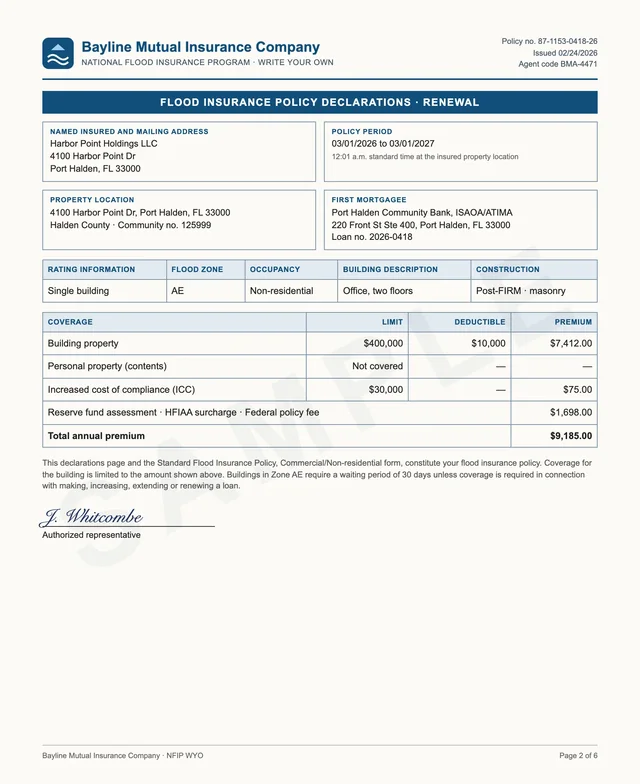
Your institution or servicer administers the escrow account. FloodCaliber™ runs inside your environment and works the part escrow depends on: how much flood insurance each loan requires.
- The required amount. Worked from your loan files building by building, with contents where they secure the loan, and each value linked to its page.
- Your systems. Outstanding principal, collateral and escrow data can come from your core through a connection scoped with your team.
- Lapses. When a policy lapses or falls short, the force-placement workflow takes it from notice to refund.
Our team works with your flood, servicing and compliance staff as a partner in flood compliance.
FloodCaliber™ supports your compliance program but does not guarantee compliance.