
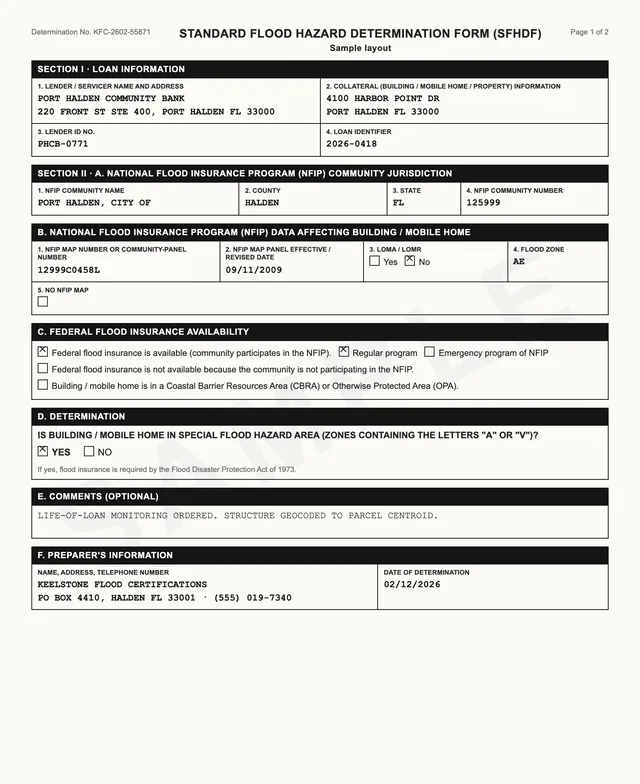
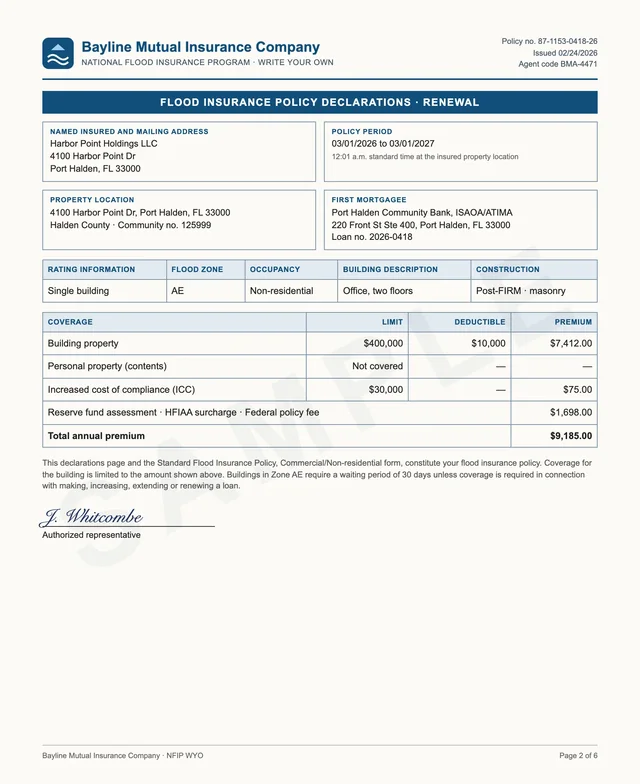
The agencies’ answer
No, subject to certain exceptions. The Regulation provides that a lender or its servicer is required to escrow flood insurance premiums and fees when a designated loan is made, increased, extended, or renewed (a triggering event), unless either the lender or the loan is excepted from the escrow requirement.122 Until the loan experiences a triggering event, the lender is not required to escrow flood insurance premiums and fees, unless: (i) A borrower requests the escrow in connection with the requirement that the lender provide an option to escrow for outstanding loans;123 or (ii) the lender determines that a loan exception to the escrow requirement no longer applies.124
Footnotes
- 12 CFR 22.5(a) (OCC); 12 CFR 208.25(e)(1) (Board); 12 CFR 339.5(a) (FDIC); 12 CFR 614.4935(a) (FCA); and 12 CFR 760.5(a)(NCUA).
- 12 CFR 22.5(d) (OCC); 12 CFR 208.25(e)(4) (Board); 12 CFR 339.5(d) (FDIC); 12 CFR 614.4935(d) (FCA); and 12 CFR 760.5(d) (NCUA).
- 12 CFR 22.5(a)(3) (OCC); 12 CFR 208.25(e)(1)(iii) (Board); 12 CFR 339.5(a)(3) (FDIC); 12 CFR 614.4935(a)(3) (FCA); and 12 CFR 760.5(a)(3) (NCUA).
Source
- Interagency Questions and Answers Regarding Flood Insurance, 87 FR 32826 (May 31, 2022), Federal Register. Published by the OCC, the Federal Reserve, the FDIC, the Farm Credit Administration and the NCUA.
- Escrow 4 on the Federal Reserve’s page for the Q&As.
Text retrieved October 29, 2026.