
The agencies’ answer
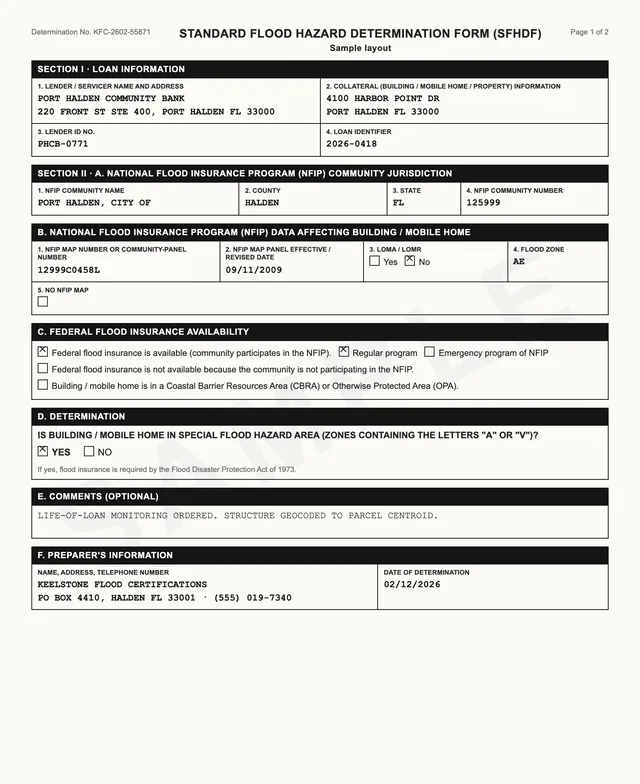
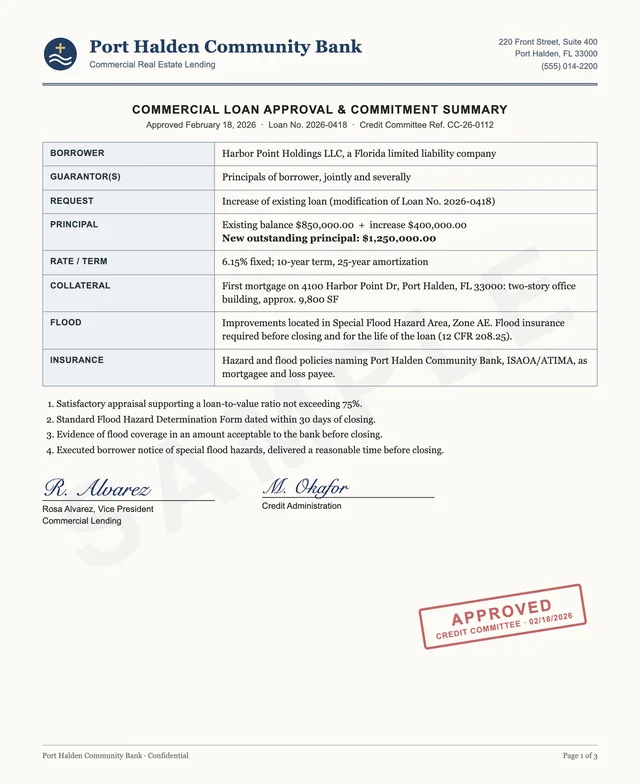
Lenders must require flood insurance on a building or mobile home when those structures are part of the property securing the loan and are located in an SFHA in a participating community.5 However, flood insurance is not required on a structure that is part of a residential property but is detached from the primary residential structure of such property and does not serve as a residence.6 If the limited utility or value structure does not qualify for the detached structure exemption, a lender may consider “carving out” the building from the security it takes on the loan to avoid having to require flood insurance on the structure. However, the lender should fully analyze the risks of this option. In particular, a lender should consider whether and how it would be able to market and sell the property securing its loan in the event of foreclosure. See also Q&A Exemptions 1.
Footnotes
- 12 CFR 22.3(a) (OCC); 12 CFR 208.25(c)(1) (Board); 12 CFR 339.3(a) (FDIC); 12 CFR 614.4930(a) (FCA); and 12 CFR 760.3(a) (NCUA).
- 12 CFR 22.4(c) (OCC); 12 CFR 208.25(d)(3) (Board); 12 CFR 339.4(c) (FDIC); 12 CFR 614.4932(c) (FCA); and 12 CFR 760.4(c) (NCUA).
Source
- Interagency Questions and Answers Regarding Flood Insurance, 87 FR 32826 (May 31, 2022), Federal Register. Published by the OCC, the Federal Reserve, the FDIC, the Farm Credit Administration and the NCUA.
- Applicability 2 on the Federal Reserve’s page for the Q&As.
Text retrieved October 29, 2026.