
The agencies’ answer
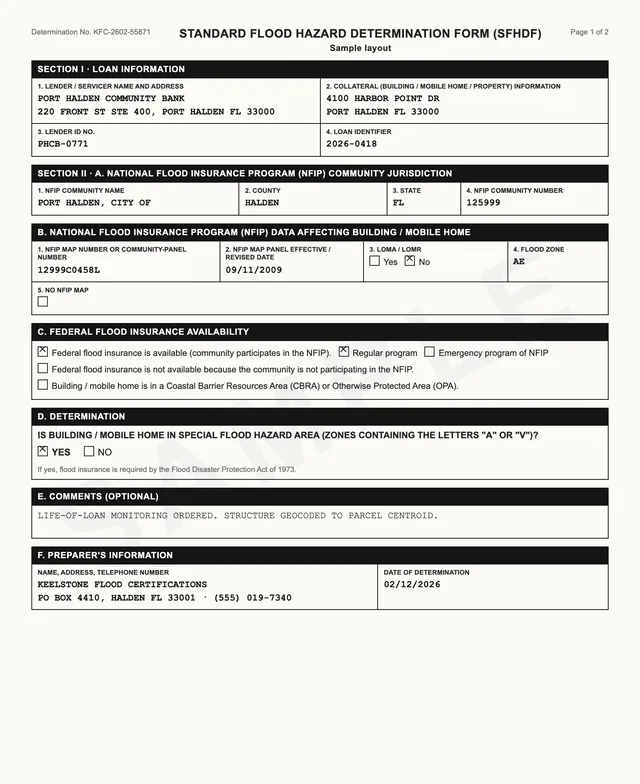
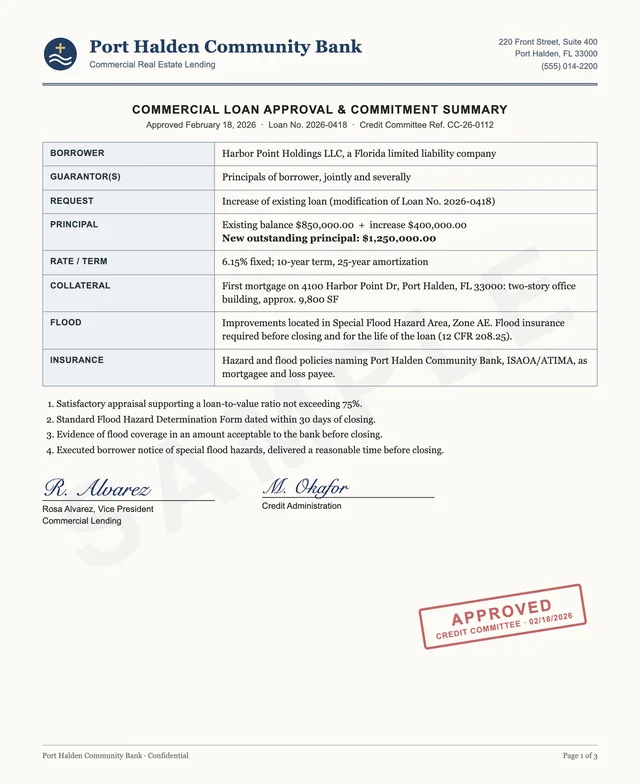
Yes, the Regulation does apply; however, a lender need not require borrowers to obtain flood insurance for a building or mobile home located in a community that does not participate in the NFIP, even if the building or mobile home securing the loan is located in an SFHA. Nonetheless, a lender, using the Standard Flood Hazard Determination Form, must still determine whether the building or mobile home is located in an SFHA.3 If the building or mobile home is determined to be located in an SFHA, a lender is required to mail or deliver a written notice to the borrower.4 In this case, a lender, generally, may make a conventional loan without requiring flood insurance. However, because Federal agencies such as the Small Business Administration, Veterans Administration, or Federal Housing Administration are prohibited from guaranteeing or insuring a loan secured by a building or mobile home located in an SFHA in a community that does not participate in the NFIP, a lender would not be able to make a federally guaranteed or insured loan. See 42 U.S.C. 4106(a). Also, a lender is responsible for exercising sound risk management practices to avoid making a loan secured by a building or mobile home located in an SFHA where no flood insurance is available, if doing so would pose an unacceptable risk to the lender.
Footnotes
- 12 CFR 22.6(a) (OCC); 12 CFR 208.25(f)(1) (Board); 12 CFR 339.6(a) (FDIC); 12 CFR 614.4940(a) (FCA); and 12 CFR 760.6(a) (NCUA).
- 12 CFR 22.9(a) (OCC); 12 CFR 208.25(i) (Board); 12 CFR 339.9(a) (FDIC); 12 CFR 614.4955(a) (FCA); and 12 CFR 760.9(a) (NCUA).
Source
- Interagency Questions and Answers Regarding Flood Insurance, 87 FR 32826 (May 31, 2022), Federal Register. Published by the OCC, the Federal Reserve, the FDIC, the Farm Credit Administration and the NCUA.
- Applicability 1 on the Federal Reserve’s page for the Q&As.
Text retrieved October 29, 2026.