
The agencies’ answer
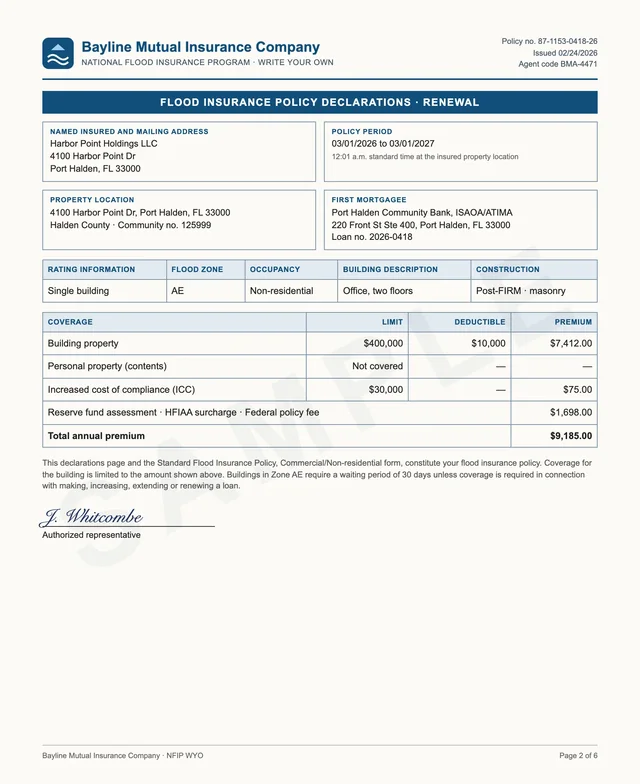
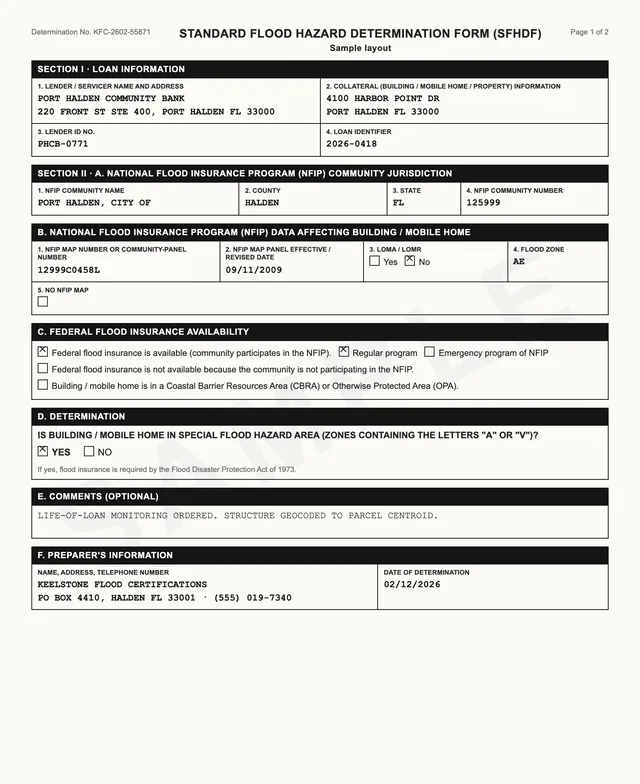
It depends. The Act (42 U.S.C. 4104b(e)) permits a lender to rely on a previous flood determination using the SFHDF when it increases, extends, renews, or purchases a loan secured by a building or a mobile home. Under the Act, the “making” of a loan is not listed as a permissible event that permits a lender to rely on a previous determination. When the loan involves a refinancing or assumption by the same lender who obtained the original flood determination on the same property, the lender may rely on the previous determination only if the original determination was made not more than seven years before the date of the transaction, the basis for the determination was set forth on the SFHDF, and there were no map revisions or updates affecting the security property since the original determination was made. Further, if the same lender makes multiple loans to the same borrower secured by the same improved real estate, the lender may rely on its previous determination if the original determination was made not more than seven years before the date of the transaction, the basis for the determination was set forth on the SFHDF, and there were no map revisions or updates affecting the security property since the original determination was made. These loans are extended by the same lender, to the same borrower, and are secured by the same improved real estate, and, therefore, these types of transactions are the functional equivalent of an increase of a loan.
When the loan involves a refinancing or assumption made by a lender different from the one who obtained the original determination, this would constitute the making of a new loan, thereby requiring a new determination.
Source
- Interagency Questions and Answers Regarding Flood Insurance, 87 FR 32826 (May 31, 2022), Federal Register. Published by the OCC, the Federal Reserve, the FDIC, the Farm Credit Administration and the NCUA.
- SFHDF 4 on the Federal Reserve’s page for the Q&As.
Text retrieved October 29, 2026.