
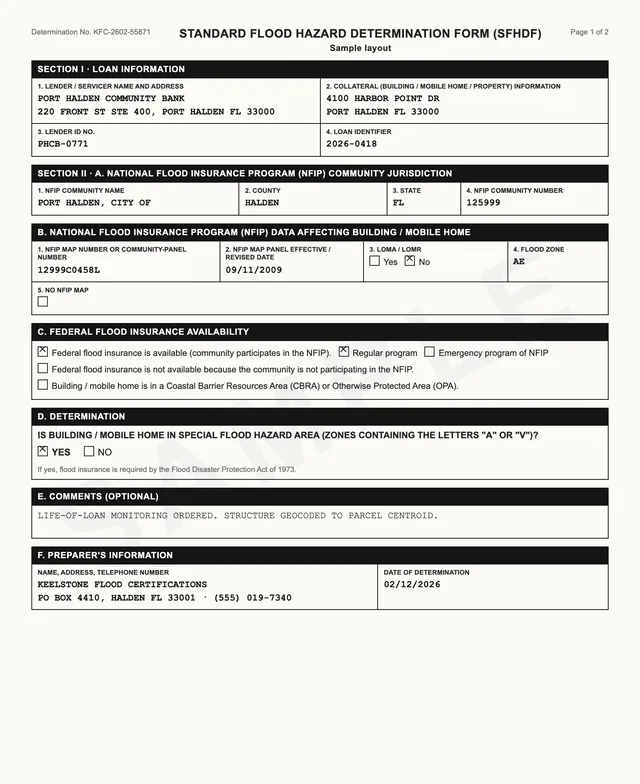
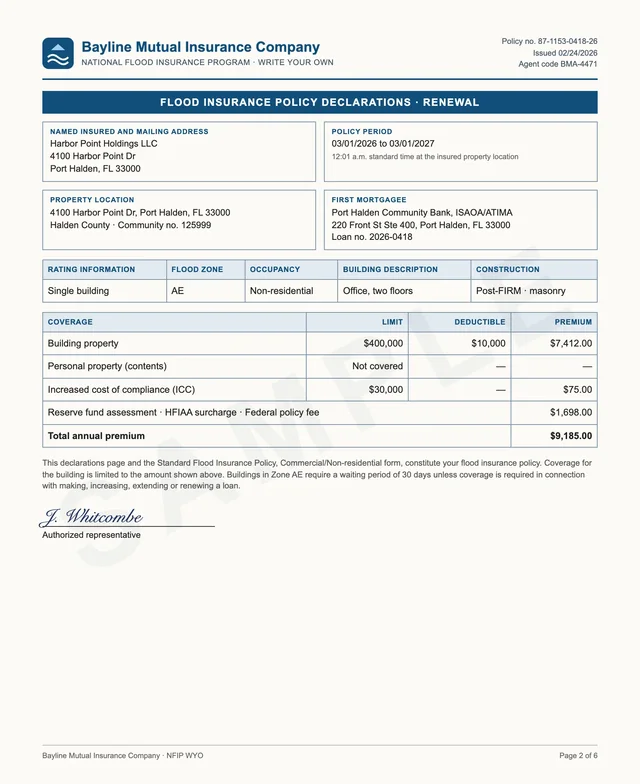
The agencies’ answer
A lender, or a servicer acting on its behalf, must escrow all premiums and fees for any flood insurance required under the mandatory purchase of flood insurance requirement for any designated loan secured by residential improved real estate or a mobile home that is made, increased, extended, or renewed on or after January 1, 2016. The escrow must be payable with the same frequency as payments on the designated loan are required to be made for the duration of the loan, unless the loan or lender is subject to one of the exceptions.115
A lender is not required to escrow for flood insurance if it qualifies for the small lender exception116 or the loan qualifies for one of the following loan-related exceptions117 in the Regulation:
• A loan that is an extension of credit primarily for business, commercial, or agricultural purposes;
• A loan that is in a subordinate position to a senior lien secured by the same property for which the borrower has obtained adequate flood insurance coverage;
• A loan that is covered by a condominium association, cooperative, homeowners association or other applicable group's adequate flood insurance policy;
• A loan that is a home equity line of credit;
• A loan that is a nonperforming loan that is 90 or more days past due; or
• A loan that has a term not longer than 12 months.
If a lender no longer qualifies for the small lender exception, it must escrow all premiums and fees for any flood insurance required under the mandatory purchase of flood insurance requirement for any designated loan secured by residential improved real estate or a mobile home that is made, increased, extended, or renewed on or after July 1 of the first calendar year in which a lender has a change in status, unless a loan qualifies for another exception.118 If a lender, other than a lender that qualifies for the small lender exception, determines at any time during the term of a designated loan secured by residential improved real estate or a mobile home that an exception from the escrow requirement that previously applied to a particular loan no longer applies to the loan, the lender must escrow flood insurance premiums and fees as soon as reasonably practicable.119
Footnotes
- 12 CFR 22.5(a) (OCC); 12 CFR 208.25(e)(1) (Board); 12 CFR 339.5(a)(1) (FDIC); 12 CFR 614.4935(a)(1) (FCA); and 12 CFR 760.5(a)(1) (NCUA).
- 12 CFR 22.5(c) (OCC); 12 CFR 208.25(e)(3) (Board); 12 CFR 339.5(c) (FDIC); 12 CFR 614.4935(c) (FCA); and 12 CFR 760.5(c) (NCUA).
- 12 CFR 22.5(a)(2) (OCC); 12 CFR 208.25(e)(1)(ii) (Board); 12 CFR 339.5(a)(2) (FDIC); 12 CFR 614.4935(a)(2) (FCA); and 12 CFR 760.5(a)(2) (NCUA).
- 12 CFR 22.5(c)(2) (OCC); 12 CFR 208.25(e)(3)(ii) (Board); 12 CFR 339.5(c)(2) (FDIC); 12 CFR 614.4935(c)(2) (FCA); and 12 CFR 760.5(c)(2) (NCUA).
- 12 CFR 22.5(a)(3) (OCC); 12 CFR 208.25(e)(1)(iii) (Board); 12 CFR 339.5(a)(3) (FDIC); 12 CFR 614.4935(a)(3) (FCA); and 12 CFR 760.5(a)(3) (NCUA).
Source
- Interagency Questions and Answers Regarding Flood Insurance, 87 FR 32826 (May 31, 2022), Federal Register. Published by the OCC, the Federal Reserve, the FDIC, the Farm Credit Administration and the NCUA.
- Escrow 1 on the Federal Reserve’s page for the Q&As.
Text retrieved October 29, 2026.