
The agencies’ answer
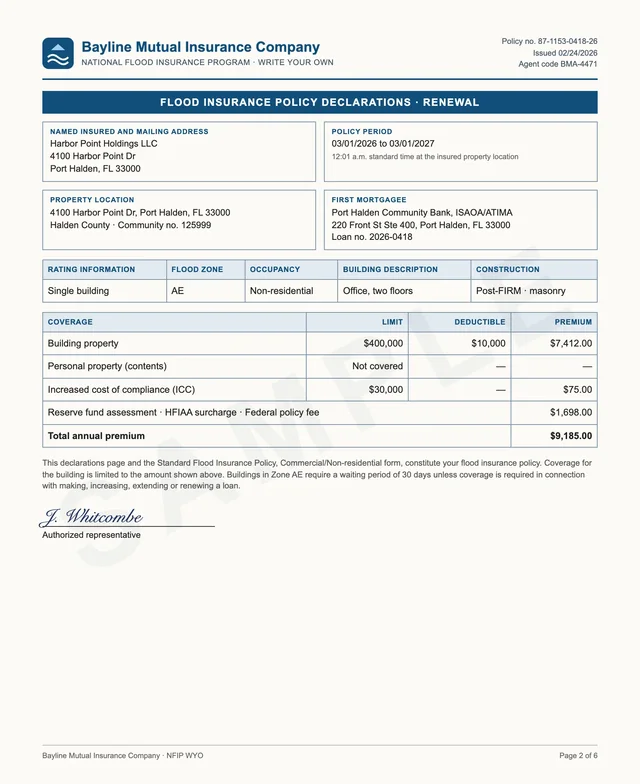
No, a lender need not reconcile or otherwise be concerned with a flood zone discrepancy. For NFIP policies issued under FEMA's Risk Rating 2.0—Equity in Action (Risk Rating 2.0),65 premium rates are no longer determined by the flood zone in which the property is located. Moreover, the flood zone is no longer included on the declarations page for NFIP policies issued under Risk Rating 2.0.
Flood insurance policies issued by a private insurer may still include the flood zone on the declarations page. Further, NFIP policies that have not been issued or renewed under Risk Rating 2.0 will include the flood zone on the declarations page.66 In these cases, lenders also need not reconcile any discrepancy.
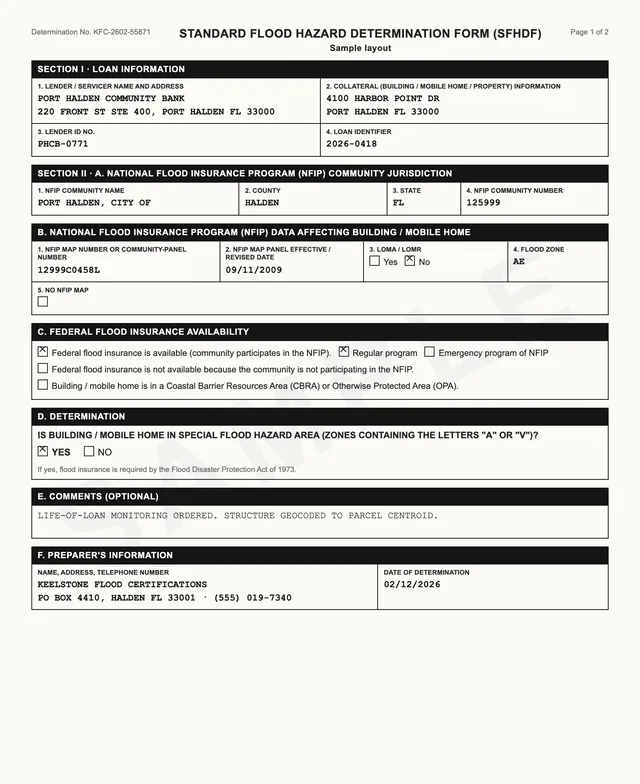
The flood zone determination is still necessary to determine if a property is located in an SFHA. If the SFHDF indicates that the building securing the loan is in an SFHA, the lender must require the appropriate amount of insurance coverage in accordance with the Act and Regulation.67 For disputes regarding whether a property is located in an SFHA, see Q&A Zone 3.
Footnotes
- See https://www.fema.gov/flood-insurance/risk-rating.
- New NFIP policies starting October 1, 2021 have been issued under Risk Rating 2.0. NFIP policies that renew between October 1, 2021, and March 31, 2022, may or may not be renewed under Risk Rating 2.0. All NFIP policies that renew on or after April 1, 2022 will be renewed under Risk Rating 2.0.
- 12 CFR 22.3(a) (OCC); 12 CFR 208.25(c)(1) (Board); 12 CFR 339.3(a) (FDIC); 12 CFR 614.4930(a) (FCA); and 12 CFR 760.3(a) (NCUA).
Source
- Interagency Questions and Answers Regarding Flood Insurance, 87 FR 32826 (May 31, 2022), Federal Register. Published by the OCC, the Federal Reserve, the FDIC, the Farm Credit Administration and the NCUA.
- Zone 1 on the Federal Reserve’s page for the Q&As.
Text retrieved October 29, 2026.