
The agencies’ answer
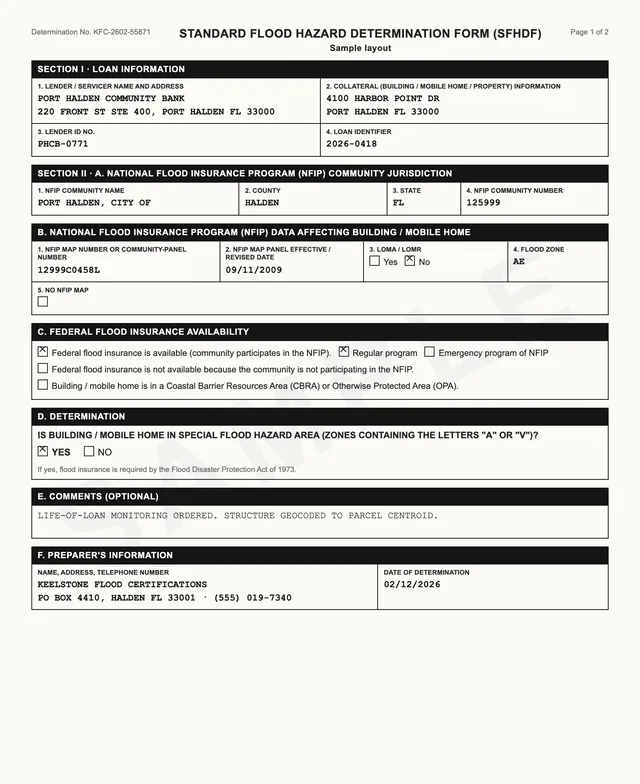
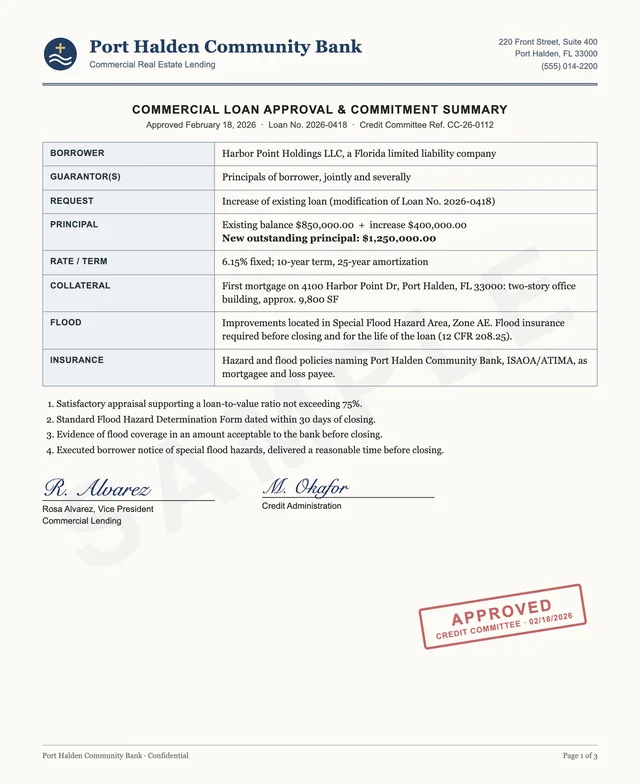
Under the Act, as implemented by the Regulation, a lender may not make, increase, extend, or renew any loan secured by a building or a mobile home, located or to be located in an SFHA in which flood insurance is available, unless the property is covered by adequate flood insurance for the term of the loan.93 The NFIP provides that lenders may comply with the mandatory purchase requirement for a loan secured by a building in the course of construction that is located in an SFHA by requiring borrowers to have a flood insurance policy in place at the time of loan origination. Such a policy is issued based upon the construction designs and intended use of the building. A borrower should obtain a provisional rating (available only if certain criteria are met) to enable the placement of coverage prior to receipt of the Elevation Certificate (EC). In accordance with the NFIP requirement, it is expected that an EC will be secured and a full-risk rating completed within 60 days of the policy effective date. Failure to obtain the EC could result in reduced coverage limits at the time of a loss. (See NFIP Flood Insurance Manual.)
Alternatively, a lender may allow a borrower to defer the purchase of flood insurance until either after a foundation slab has been poured and/or an Elevation Certificate has been issued or, if the building to be constructed will have its lowest floor below the Base Flood Elevation, when the building is walled and roofed. However, in order to comply with the Regulation,94 the lender must require the borrower to have flood insurance for the security property in place before the lender disburses funds to pay for building construction (except for funds to be used to pour the slab or perform preliminary site work, such as laying utilities, clearing brush, or the purchase and/or delivery of building materials). If the lender elects this approach and does not require the borrower to obtain flood insurance at loan origination, then it should have adequate internal controls in place at origination to ensure that the borrower obtains flood insurance no later than 30 days prior to disbursement of funds to the borrower in light of the NFIP 30-day waiting period requirement. (See NFIP Flood Insurance Manual.) See also Q&A Construction 5.
Footnotes
- 12 CFR 22.3(a) (OCC); 12 CFR 208.25(c)(1) (Board); 12 CFR 339.3(a) (FDIC); 12 CFR 614.4930(a) (FCA); and 12 CFR 760.3(a) (NCUA).
- 12 CFR 22.3(a) (OCC); 12 CFR 208.25(c)(1) (Board); 12 CFR 339.3(a) (FDIC); 12 CFR 614.4930(a) (FCA); and 12 CFR 760.3(a) (NCUA).
Source
- Interagency Questions and Answers Regarding Flood Insurance, 87 FR 32826 (May 31, 2022), Federal Register. Published by the OCC, the Federal Reserve, the FDIC, the Farm Credit Administration and the NCUA.
- Construction 4 on the Federal Reserve’s page for the Q&As.
Text retrieved October 29, 2026.