
The agencies’ answer
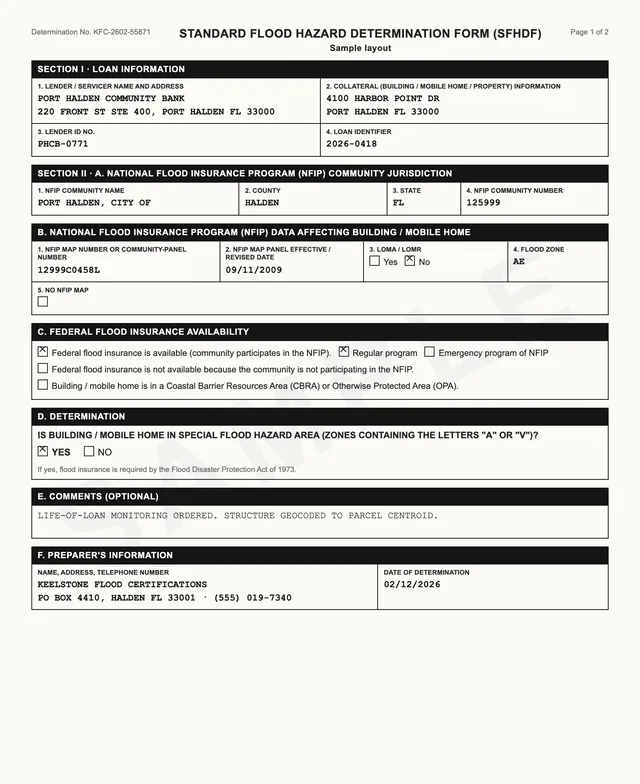
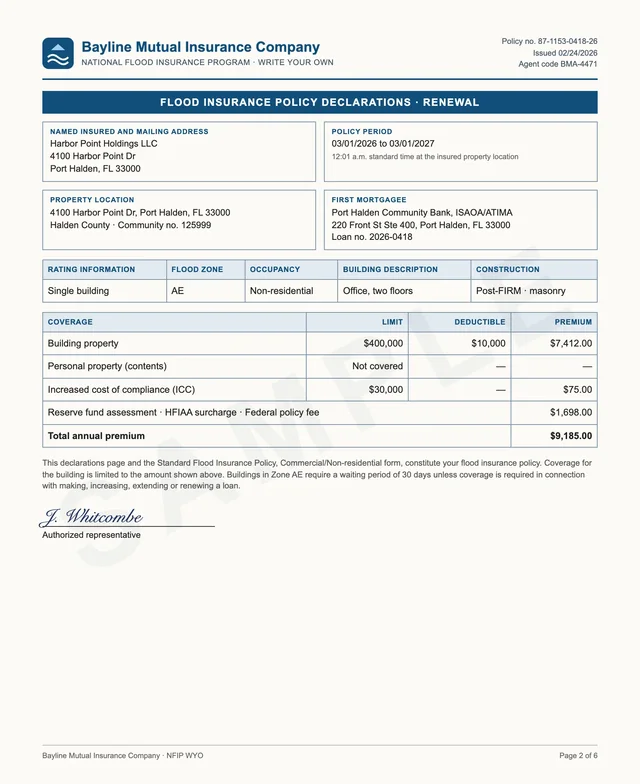
When a lender makes a determination that the collateral securing the loan is uninsured or underinsured, it must begin the force placement process. Specifically, the Act and the Regulation provide that if a lender, or a servicer acting on its behalf, determines at any time during the term of a designated loan that a building or mobile home and any personal property securing the loan is not covered by flood insurance or is covered by flood insurance in an amount less than the amount required under the Regulation, the lender or its servicer must notify the borrower that the borrower must obtain flood insurance, at the borrower's expense, in an amount at least equal to the minimum amount required under the Regulation. If the borrower fails to obtain flood insurance within 45 days of the lender's notification to the borrower, the lender must purchase flood insurance on the borrower's behalf at that time. The lender must force place flood insurance for the full amount required under the Regulation, or if the borrower has purchased flood insurance that otherwise satisfies the flood insurance requirements but in an insufficient amount, the lender would be required to force place only for the “insufficient amount,” that is, the difference between the amount the borrower insured and the required amount of flood insurance. The Act and the Regulation also provide that the lender or its servicer may purchase insurance on the borrower's behalf and may charge the borrower for the cost of premiums and fees incurred in purchasing the insurance beginning on the date on which flood insurance coverage lapsed or did not provide a sufficient coverage amount. See also Q&A Force Placement 8.145
A lender or its servicer may include in the force placement notice the amount of flood insurance needed. By providing this information, the lender or its servicer can help ensure that a borrower obtains the appropriate amount of insurance. In addition, before the lender or servicer must force place flood insurance, if the lender or servicer is aware that a borrower has obtained insurance that otherwise satisfies the flood insurance requirements but in an insufficient amount, the lender or servicer should inform the borrower an additional amount of insurance is needed in order to comply with the Regulation.
Footnotes
- 12 CFR 22.7(a) (OCC); 12 CFR 208.25(g)(1) (Board); 12 CFR 339.7(a) (FDIC); 12 CFR 614.4945(a) (FCA); and 12 CFR 760.7(a) (NCUA).
Source
- Interagency Questions and Answers Regarding Flood Insurance, 87 FR 32826 (May 31, 2022), Federal Register. Published by the OCC, the Federal Reserve, the FDIC, the Farm Credit Administration and the NCUA.
- Force Placement 1 on the Federal Reserve’s page for the Q&As.
Text retrieved October 29, 2026.